


By the time I was 27, I had less than $1,000 saved across six different checking and savings accounts, no real understanding of how to handle money, and I was engaged to be married to a man whose jam was personal finance.
Matt was important to me, so personal finance became important to me too. As an engagement gift, I signed us up for a six-week financial education course. The course gave us a solid foundation for money planning and communication before our wedding, but I never loved the day-to-day tasks of managing money the way he did.
It mattered to me in the same way getting gas or flossing your teeth matters. It had to be done.
When Budgeting Became Date Night (Sort Of)
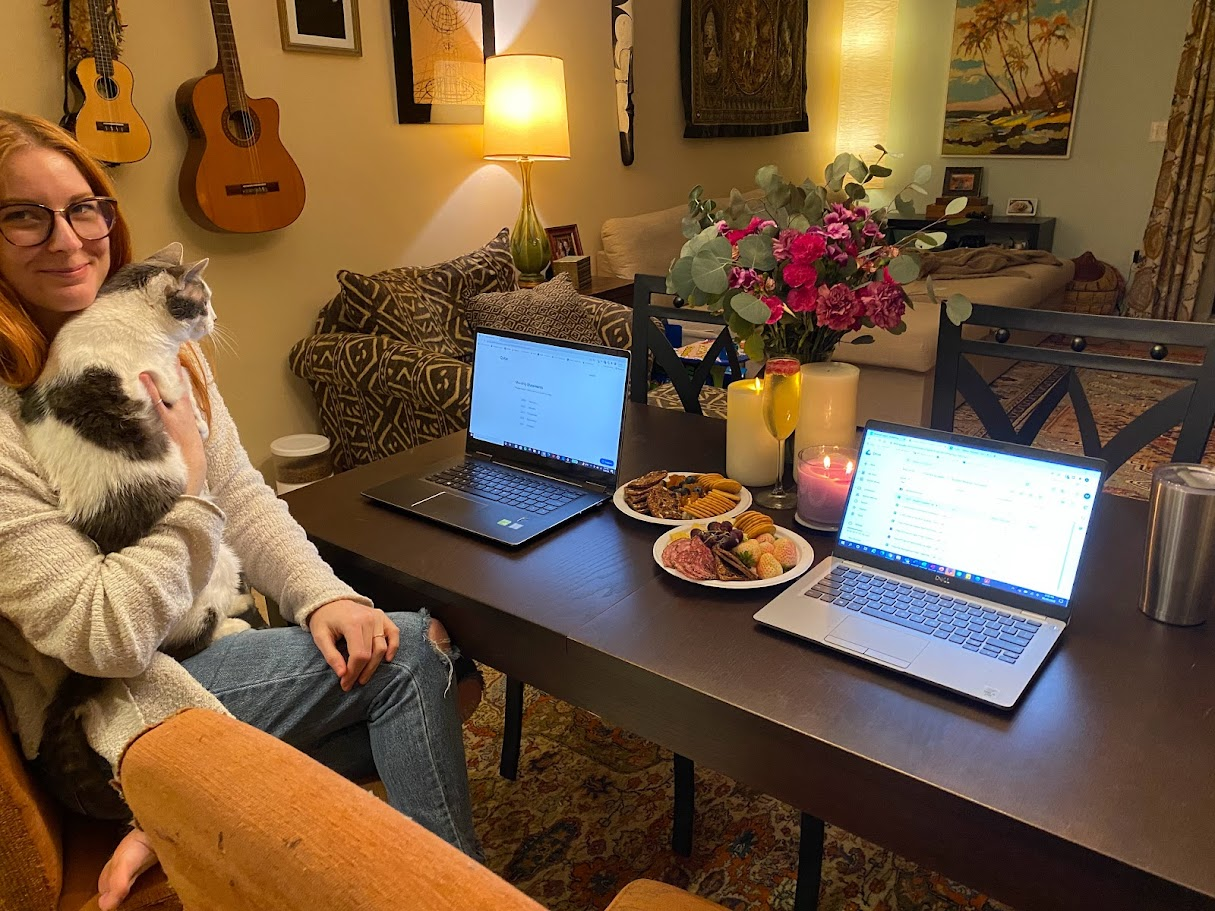
A few years into our marriage, you would have found us doing weekly budget reviews together over charcuterie and cheap white wine. It was my attempt at turning budgeting into something resembling a fun date night.
But no matter how many Norah Jones songs played softly in the background, or how many cheese cubes I nervously stuffed into my mouth, one thing remained true. We were broke. Or at least, it felt that way.
We were committed to saving between 20 and 30 percent of our income thanks to that early financial education. After funding our long-term savings and emergency fund, our bills consumed nearly every remaining dollar on Matt’s six-tab, nightmare-alley Excel spreadsheet that he had built from scratch.
Matt drove the spreadsheet. I sat passenger and pouted.
Seeing even $30 in the red during a budget review was deflating,especially when we were trying to practice intentional spending without feeling restricted. There was rarely any room left for fun when building the next month’s budget. And even when there was a little extra, tracking our real-time spending against what we had planned was nearly impossible.
In short, budgeting sucked. And no amount of early 2000s soft jazz or Colby Jack cheese was going to fix it.
Discovering a Budgeting App That Worked for Us as a Couple
In 2020, Matt came across a new budgeting app called Qube Money and suggested we give it a try. I was skeptical, but if it meant escaping our budgeting rut, I was willing to try just about anything.
We created a free account, rebuilt our Frankenstein Excel budget inside the Qube planning screen, and clinked our plastic wine glasses together in cautious optimism.
The following week’s budget review wrapped up before we even made it through the second verse of “Come Away With Me.” We hadn’t overspent, we had full visibility into our spending, and for the first time, the budget we built together actually reflected our real life.
Using a budgeting app alongside daily spending was a new habit for me, and surprisingly, it felt rewarding. Qube turned budgeting into something that felt like a game.
When Budgeting Finally Felt Easier
Over the next three months, we:
- Identified areas where we could trim spending
- Increased categories that consistently caused overspending
- Created sinking funds for variable expenses like quarterly termite control and annual HOA dues
Our budgeting sessions moved from slumped shoulders at the kitchen table under the fluorescent glow of laptops to quick check-ins on our phones while lounging on the couch under a cozy blanket.
More importantly, something else shifted.
All the energy we once spent maintaining and reacting to our budget could now go toward being proactive and intentional with how we spent and saved. Qube became an integral part of our financial ecosystem. It helped us zoom out, see the bigger picture, and create a spending plan aligned with our long-term goals.
Budgeting Without the Weight
We still listen to early 2000’s smooth jazz and enjoy cubed cheeses.
But now, when I hear Norah Jones, I smile. Not because budgeting nights were romantic, but because I know I will never again stare at the sickly green glow of a chaotic Excel spreadsheet, wondering where all our money went.
Budgeting no longer feels like something happening to us. It feels like something we actively use to support the life we are building. If you’re curious, you can learn more about Qube+ here.
Cheers.
To Qube.
Yana Tarr,
Co-Host of the CoastFI Couple podcast